
Crypto's Clarity Act Stalls Amid Coinbase and Wall Street Dispute |
The Clarity Act faces delays as Coinbase and Wall Street clash over stablecoin provisions, impacting the future of U.S. cryptocurrency regulation. |
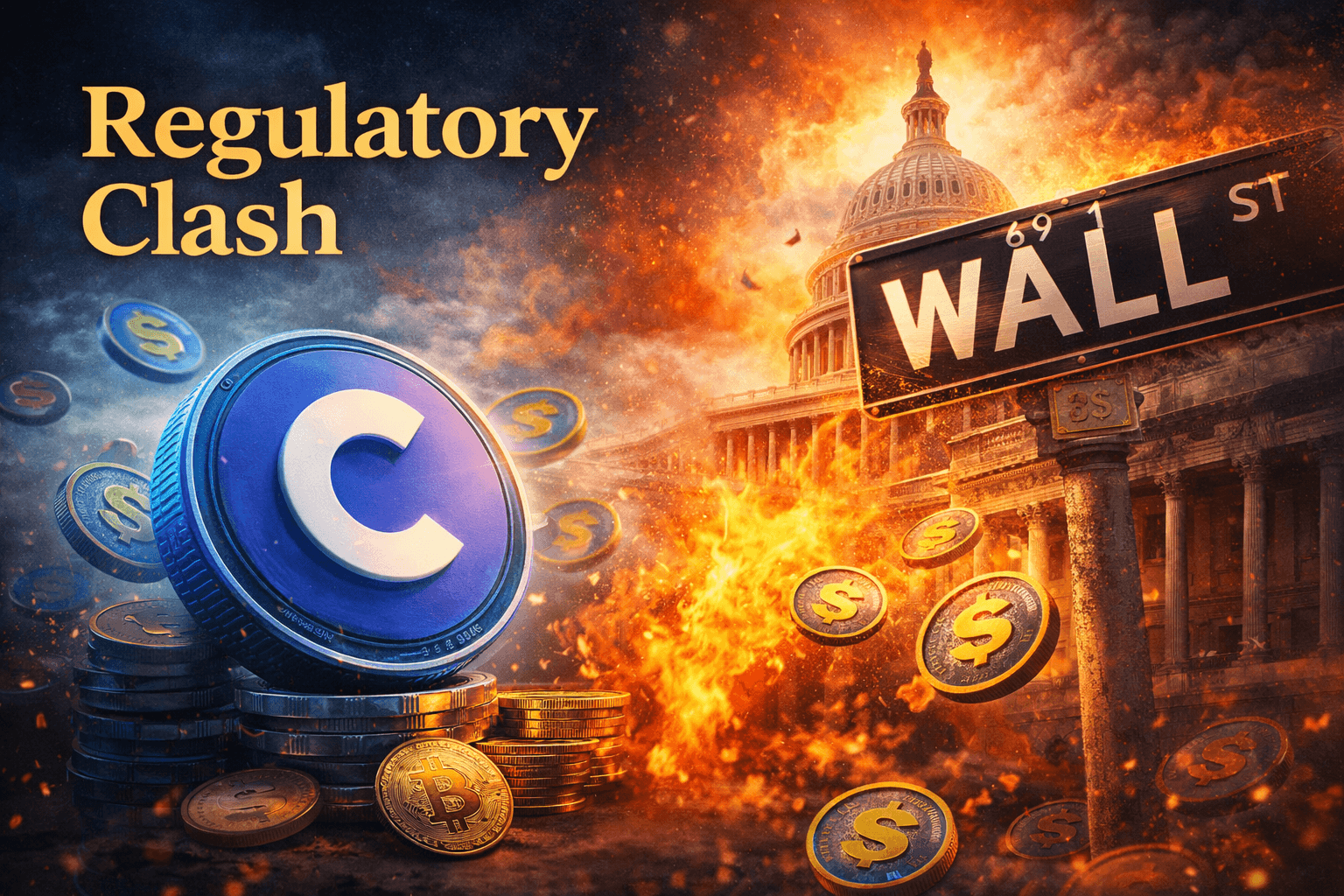
The much-anticipated Clarity Act, designed to establish a comprehensive regulatory framework for cryptocurrencies in the United States, has encountered significant delays.
This setback stems from a contentious dispute between leading crypto exchange Coinbase and traditional financial institutions over specific provisions related to stablecoins.
Introduced by the Senate Banking Committee, the Clarity Act aims to delineate the regulatory boundaries for digital assets, providing much-needed guidance for exchanges, decentralized finance (DeFi) platforms, and stablecoin issuers.
However, the bill's progress has been halted due to disagreements over clauses that would restrict crypto platforms from offering yield-like rewards on stablecoin holdings.
In mid-January 2026, Coinbase CEO Brian Armstrong publicly withdrew support for the bill, citing concerns that the proposed restrictions would adversely affect DeFi innovation and the company's business model.
Armstrong emphasized that the current draft could limit DeFi activity, restrict tokenized equity products, and prevent stablecoin issuers from offering yield-like rewards to users.
He also expressed apprehension about expanded government access to financial data and a shift in regulatory authority toward the Securities and Exchange Commission (SEC) at the expense of the Commodity Futures Trading Commission (CFTC).
Following Coinbase's withdrawal, the Senate Banking Committee postponed a scheduled markup session to allow more time for negotiations, casting uncertainty over the Act's future.
Traditional financial institutions view the delay as an opportunity to influence the final language of the bill, advocating for protections against stablecoin innovations that could compete with bank deposits.
The impasse has also led to market volatility.
Shares of digital asset companies, including Coinbase, experienced declines as investors reacted to the legislative gridlock.
Analysts suggest that the delay reinforces the narrative that the U.S. is increasingly hostile to decentralized technologies, potentially driving innovation to more crypto-friendly jurisdictions.
Despite the current stalemate, stakeholders remain engaged in discussions to find a compromise that balances innovation with financial stability.
The outcome of these negotiations will significantly impact the future of cryptocurrency regulation in the United States.
As the debate continues, the crypto industry and traditional financial institutions must navigate a complex landscape to achieve a regulatory framework that fosters growth while ensuring consumer protection.
The resolution of the Clarity Act will be a pivotal moment for the digital asset market, setting a precedent for how emerging financial technologies are governed in the years to come. |
0 Comments
Join the conversation
Be the first to comment
Share your thoughts above.